Unit 11: Thoughts on Emergent Media and Blogging

Before attending Bloomsburg University, I never heard of an emergent media course, so when my advisor put it on my schedule, I didn’t really know what to expect. However, after a full semester of learning some of the in and outs of emergent media, I couldn’t be happier with the fact that I took this course!

This course was the first online class I had taken in my college career. I was very nervous at first, seeing as I didn’t know how the process would go, but the professor gave clear instructions each time that really allowed me to understand things. It was different not having things assigned on individual days, but once I got the hang of it I actually preferred this style as opposed to the typical date-specific class assignments.

This course was also the first in which I had to start a blog. I personally liked this part of the course because I was able to educate my audience while also allowing space for my own personal opinions on the topic to be shown.

We learned a total of 11 units out of our textbook, Media Literacy by W. James Potter. These units included lessons about media literacy, the development of the mass media industries, mass media content and reality, and more. My favorite lessons were when we studied news and entertainment content. As a mass communications major, I felt like these two chapters really helped highlight some of the most important industries in mass comm. I liked the fact that I was able to bring in information that I learned from other mass communications courses and utilize that to help me out with these lessons.

Though I liked a lot of the course material, I wasn’t too impressed with the sports section. It was really interesting learning about some of the aspects with media and sports (such as the money cycle), but these big sports leagues never really interested me outside of the course, so it was a little difficult to keep myself engaged.

If you ever have the opportunity to take this emergent media class, I highly recommend that you take the chance. You won’t regret it!
Unit 10: What Can We Do To Protect Our Privacy?

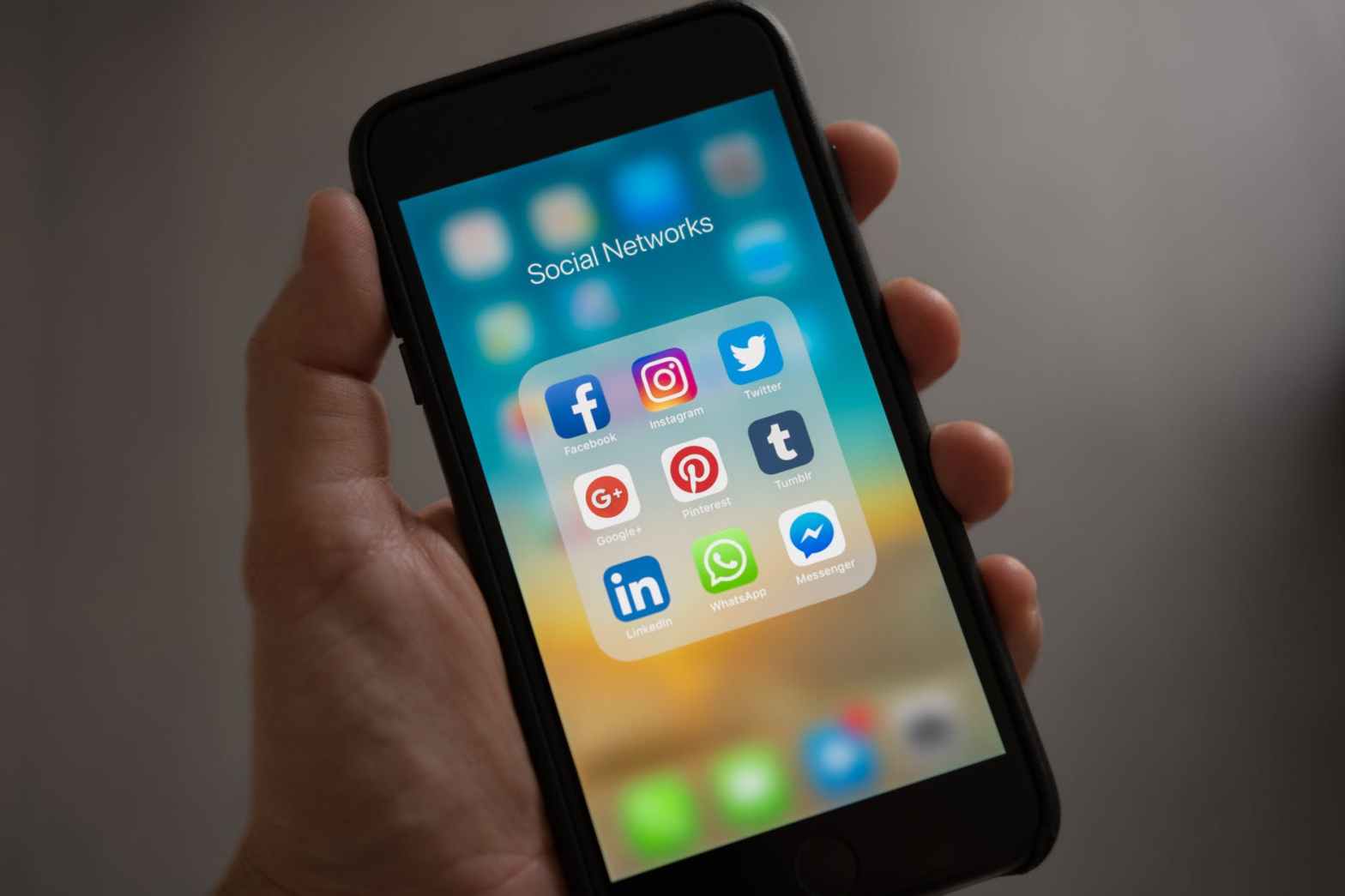
Privacy is something many people are concerned about when joining social media sites. If one can manage to master all the tools offered to us by these social media sites, they will be able to lock their profiles down to their liking.

One of the many tools offered on nearly all social media platforms is the ability to put their profile on private. Doing this allows for the owner of the account to have their posts hidden from those who do not follow or have them as a friend on the account. Owners can take their privacy one step closer by limiting more of who interacts with their account. Doing things such as hiding personal information from view (such as birthday, current residency, or where they went to school) can help relax those who worry when it comes to privacy.

An obvious tip to keep your privacy is friending only those who you know. It’s best to make sure you are familiar with the people you are allowing to see your content.

Creating a strong password, that you’ll remember of course, is also a very ideal tip when it comes to keeping your privacy high. If you have a hard time remember things like this, there are many useful apps that you can download and write your passwords in. Many of these apps have been tested thoroughly for security, but you can always read the reviews and see others’ experiences with it!

Finally, always remember to log out. It’s easy to forget, especially when you’re on your phone, however, the quicker you make it a habit the easier doing it will get!

Unit 4: Media Literacy

In this day and age, it is very necessary to be literate in many different things. Being literate essentially means that you are able to understand, and possibly recite back in your own words, the information provided to you. A person can be literate on any topic ranging from things like the English language, to more precise things like astrology or the economy.

With the amount of growing technology and media intake that we have now, it is very important for a person to have media literacy. According to our textbook, Media Literacy (8th edition) by W. James Potter, the term essentially means “a set of perspectives that we actively use to expose ourselves to the mass media in order to interpret the meaning of the messages we encounter.” It also mentions that, “media literacy is multidimensional, consisting of cognitive, emotional, aesthetic, and moral dimensions, and media literacy is a continuum, not a category” (Media Literacy, 499)

Media literacy has 3 building blocks: Personal Locus, Knowledge Structure, and Skills. To start, the building block “personal locus” provides mental energy and direction, and its main goal is to shape information processing tasks. The second building block, “knowledge structure”, is carefully constructed and helps us see patterns in our memory, as well as sets organized information in our memory. Our notes indicate that media literacy involves the building block knowledge structure when it comes to media effects, media content, media industries, the real world, and ourselves. The last building block, “Skills”, is used to construct knowledge structures and helps us mine through piles of facts. There are 7 skills included in this building block: analysis (breaking down a message into meaningful elements), evaluation (making a judgement about the value of an element), grouping (determining which elects are alike in some way, then determining how a group of elements are different from other groups of elements), induction (inferring a pattern across a small number of elements, then generalizing the pattern to all elements in the larger set), deduction (using general principles to explain particulars, typically using syllogistic reasoning), synthesis (the assembling of elements into a new structure), and abstracting (creating a brief, clear, and accurate description capturing the essence of a message).

There is a lot of learning that comes with having media literacy, but with practice and an open mind, it can be achieved by anyone and everyone!

Unit 3: Social Media and Its Influence on My Life

Growing up in the age where social media was just taking off, I never would have imagined the kind of impact that it now has on me, as well as the world at large. Personally, I’m on various sorts of social media a majority of the day. Whether I am browsing through Facebook, looking at photos on Instagram, or clicking through stories on Snapchat, I always find a way to let social media keep me occupied.

Social Media has great influence over many things that make me who I am today. To start, memes seen daily on all platforms of social media, have shaped my sense of humor ever since they started circulated at the start of 2011. The things I find funny have changed drastically throughout the years, all thanks to all the ever-changing jokes exchanged by millions on sites such as Twitter and Facebook.

Social media has also managed to make me more empathetic. Seeing strangers share some of their stories and personal experiences with the world has made me feel more connected to them.

Though social media has positively affected me throughout the years, there are some qualities that I would not posses had it not been for the connection I have created with stigmas surrounded certain social media. For example, after posting a picture on Instagram, I spend hours keeping track of who likes my picture and worrying whether it will get enough likes or not. “The amount of likes you get on your photo determines your popularity” is an unspoken belief that circulates around the Instagram community. This can, and has, taken a toll on one’s self esteem in ways that could be avoidable without social media.

All in all, social media has had one of the biggest impacts in my life. Not a day goes by that I don’t check up on each and every account I have, as unhealthy as that seems. However, as happy as I am to be able to be easily entertained and occupied by these social media, I am aware of the possible negative circumstances that can come along with them.

Design a site like this with WordPress.com
Get started